

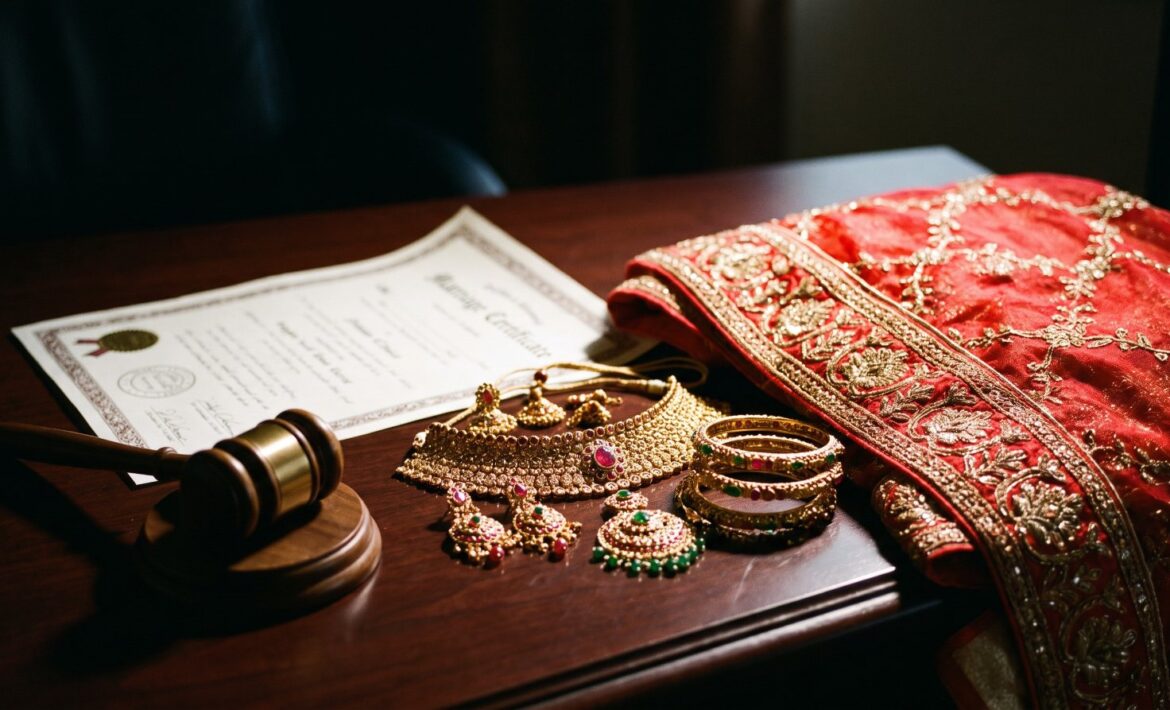

Laws against dowry and cruelty protect women from real harm. But sometimes these provisions are misused in bitter matrimonial disputes, and entire families are named in a complaint. If you are facing a case you believe is false, acting calmly and quickly protects you. This guide explains the law and your options.
The Laws Involved
| Old Law | New Law (from 1 July 2024) | Subject |
|---|---|---|
| Section 498A IPC | Sections 85 and 86 BNS | Cruelty by husband or his relatives |
| Section 304B IPC | Section 80 BNS | Dowry death |
| Dowry Prohibition Act, 1961 | Unchanged | Giving or taking dowry |
| Section 482 CrPC | Section 528 BNSS | High Court power to quash proceedings |
First Steps If a Complaint Is Filed
- Do not panic and do not contact the complainant in anger. Any threat can be used against you.
- Find out whether an FIR has been registered, or whether the matter is still at the complaint or mediation stage.
- Speak to a criminal lawyer immediately about anticipatory bail for yourself and named family members.
- Gather documents and messages that show the real facts.
- Attend police or Crime Against Women (CAW) Cell meetings with legal guidance.
Your Legal Remedies
- Anticipatory bail under Section 482 BNSS protects you and your family from arrest.
- Quashing petition under Section 528 BNSS before the Delhi High Court, if the complaint is plainly false, vague or a settlement has been reached.
- Mediation and settlement, which often resolves both the criminal case and the matrimonial dispute together.
- Defending the trial with evidence if the case goes ahead.
- Counter-remedies such as a complaint for false charge under Section 248 BNS or a suit for malicious prosecution, once the case is decided in your favour.
Supreme Court Safeguards
In Arnesh Kumar v. State of Bihar (2014), the Supreme Court held that police should not arrest automatically in cases punishable with up to seven years, including cruelty cases, and must first issue a notice of appearance. Courts have also warned against roping in distant relatives without specific allegations.
Evidence That Helps
- Messages and emails showing the actual relationship and events.
- Proof of where relatives lived, showing they were not involved.
- Bank records showing no dowry demands or transfers.
- Earlier complaints or statements that contradict the current version.
- Witnesses who saw the couple’s life together.
Need Help With Your Case?
Speak to Advocate Kamini Sharma for advice on your situation. Call, WhatsApp or book a consultation — you will usually hear back within an hour.
Frequently Asked Questions
Can a dowry case be settled?
Yes. Cruelty cases are often settled through mediation, and the Delhi High Court can quash the FIR after a genuine settlement.
Will all family members be arrested?
Not automatically. Police must follow the notice procedure for such offences, and anticipatory bail can protect family members.
How long does a quashing petition take?
It depends on the court’s list, but the High Court may grant interim protection on the first hearing.
This article is for general information only and is not legal advice. Laws and court practice change; please consult an advocate about your specific facts.